AICS | LATEST

News & events

Follow the latest developments from AICS, including research highlights, publications, events, people, and opportunities across our interdisciplinary community.

FEATURED

Events  • 6 Oct 2026

AICS-SOUNDS Joint Lecture Series brings together research and public talks

The AICS-SOUNDS Joint Lecture Series brings together two complementary formats: research lectures in Kaiserslautern for the scientific community, and public lectures in Saarbrücken introducing topics in Computational Social Science to students, researchers and interested audiences. The programme features researchers from AICS, SOUNDS and partner institutions working across AI, computing and society.

EVENT PROGRAMME

Talks, lectures & events

Join our talks, workshops and events, organised by AICS and in collaboration with our partner institutions. Our events bring together researchers from different disciplines to discuss AI, computing and societal change.

When
12 November 2026 · 12:15
Where
MPI-SWS Kaiserslautern · Room 111
Paul-Ehrlich-Straße 26
67663 Kaiserslautern, Germany
Meeting ID: 643 5627 5510
Passcode: 108402
 
Host
Krishna Gummadi
Affiliation
RPTU
Type
Research Lecture
Audience
Researchers, faculty, postdocs and doctoral researchers
Registration
No registration required
Abstract

In regression and classification tasks with tabular datasets, most of the literature on explanation in ML (e.g. SHAP, permutation importance) has focused on predictive attribution: does feature X_i help predict outcome Y? At its heart, predictive attribution captures correlation, not causation. We instead ask a causal question: would manipulating feature X_i change outcome Y? We define a natural quantity to answer this question, the feature intervention effect: Δ_i = E[Y | do(X_i=+1)] − E[Y | do(X_i=−1)]. In general, estimating this quantity from observational data alone would entail strong causal assumptions. We propose FADO (Feature-wise Amortized Do-Operators), an amortized inference method using prior-fitted networks trained on synthetic tabular datasets generated by structural causal models. During training, the synthetic data generating process is known, so we can compute ground truth intervention effects Δ_i, and train a model to predict them at test time from a purely observational tabular dataset. As we demonstrate through extensive experiments, our new causal explainability method is easy to train and provides better explanations under a range of settings for which standard predictive attribution fails, including proxy variables, confounders, colliders, and placebos. We evaluate it on real, synthetic and semi-synthetic datasets, with and without hidden confounders, and compare it to existing predictive attribution methods and state-of-the-art causal inference methods.

Bio

Seth Flaxman (www.sethrf.com) is a professor in the Department of Computer Science at RPTU Kaiserslautern-Landau. Originally from the Chicago area, he received his PhD in 2015 from Carnegie Mellon University in machine learning and public policy (School of Computer Science and Heinz College of Information Systems and Public Policy). He was an assistant professor at Imperial College London (2017-2021) and an associate professor and professor at the University of Oxford (2021-26). In 2022, he co-founded the Machine Learning & Global Health network (www.MLGH.net) of researchers spanning three continents with a kickoff workshop held in Kigali, Rwanda at ICLR in 2023.

When
Friday, 4 December 2026 · 12:15
Where
Saarland University Campus
Building E1.7 · Room 3.23
Saarbrücken
Host
SOUNDS
Affiliation
  • Krishna Gummadi
    MPI-SWS

  • Marius Kloft
    RPTU

  • Johnnatan Messias
    MPI-SWS

Type
Public Lecture
Audience
Students, researchers and anyone interested in Computational Social Science
Registration
About the lecture

Prediction markets have emerged as a powerful source of real-time information about expectations of future events. In this lecture, we will first introduce the foundations of prediction markets, explain how they work, and discuss why they have become an increasingly valuable data source for computational social science and machine learning.

We will then present our ongoing research on modeling the evolving state of the world using prediction market time series, including methods for identifying latent relationships between events, detecting market-wide anomalies, and uncovering potentially causal dependencies across interconnected markets.

Finally, we will discuss how large language models can be used to characterize news and media sources by their influence on future market predictions, providing new perspectives on information diffusion, forecasting, and the interaction between media, human expectations, and AI. Overall, the lecture will highlight how prediction markets provide a unique setting for studying collective intelligence, forecasting, and AI, while outlining several open research challenges at the intersection of computational social science, economics, and machine learning.

Speakers

Krishna Gummadi
MPI-SWS
Speaker profile →

Marius Kloft
RPTU
Speaker profile →

Johnnatan Messias
MPI-SWS
Speaker profile →

When
Friday, 11 December 2026 · 12:15
Where
Saarland University Campus
Building E1.7 · Room 3.23
Saarbrücken
Host
SOUNDS
Affiliation

Saarland University

Type
Public Lecture
Audience
Students, researchers and anyone interested in Computational Social Science
Registration
About the lecture

Digital technologies and large-scale data are transforming urban governance, or so the promise of the smart city suggests. GIS-based planning tools and open data platforms point towards increasingly data-driven cities, yet the everyday reality of urban planning is often more ambivalent.

Drawing on qualitative workplace interviews with planners in small and medium-sized cities in Germany, Austria and Switzerland, this lecture explores how digital transformation is actually embedded in planning practice. It examines how planners navigate between innovative ambitions and everyday routines, and how local knowledge practices, limited resources, hierarchical procedures and incomplete digitisation shape the use of digital tools.

The lecture will also consider what Computational Social Science can contribute to the study of urban planning and governance. It will discuss text-based methods, spatial data approaches and participatory data sources, while reflecting on the limits of computational methods and the continuing importance of qualitative, practice-oriented research.

Speaker

Carola Fricke
Saarland University
Speaker profile →

When
Friday, 8 January 2027 · 12:15
Where
Saarland University Campus
Building E1.7 · Room 3.23
Saarbrücken
Host
SOUNDS
Affiliation

Saarland University

Type
Public Lecture
Audience
Students, researchers and anyone interested in Computational Social Science
Registration
About the lecture

Given the growing popularity of generative AI, including for voting advice, this lecture asks how reliable ChatGPT is as a source of political information.

The research examines ChatGPT’s responses about the positions of the main German parties prior to the 2025 federal election. While ChatGPT places each party broadly in the expected left-liberal or right-conservative positions on average, its responses are also noisy and biased.

The findings suggest that ChatGPT may be a less reliable source of voting advice than more traditional sources, raising important questions for developers and regulators about the use of generative AI for politically sensitive topics.

Speaker

Alex Hartland
Saarland University
Speaker profile →

Latest from AICS

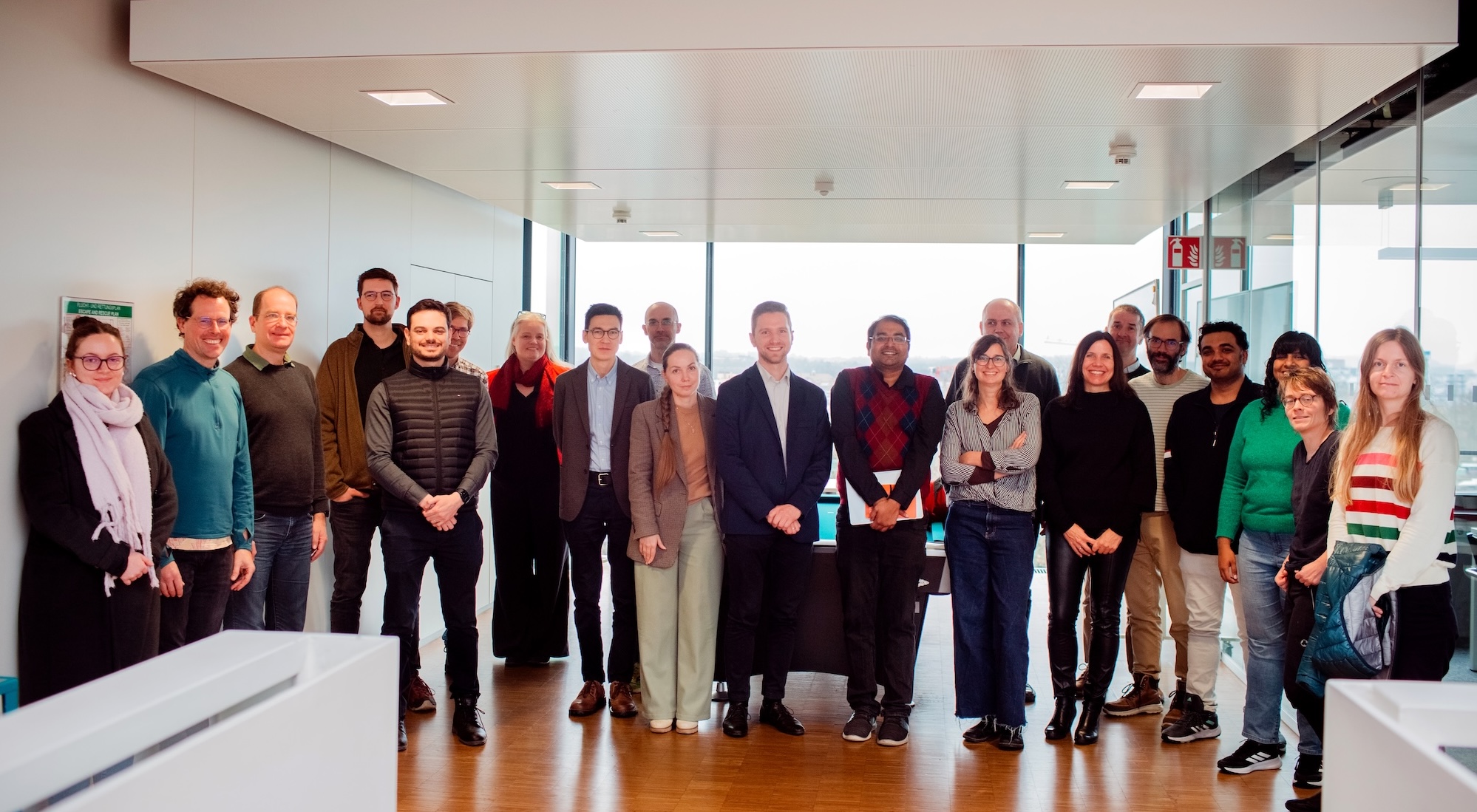
AICS-SOUNDS Colloquium on AI and Law

AICS and SOUNDS brought together researchers from computer science, law, and the social sciences to explore emerging questions at the intersection of artificial intelligence, legal reasoning, and public policy.
Read More →

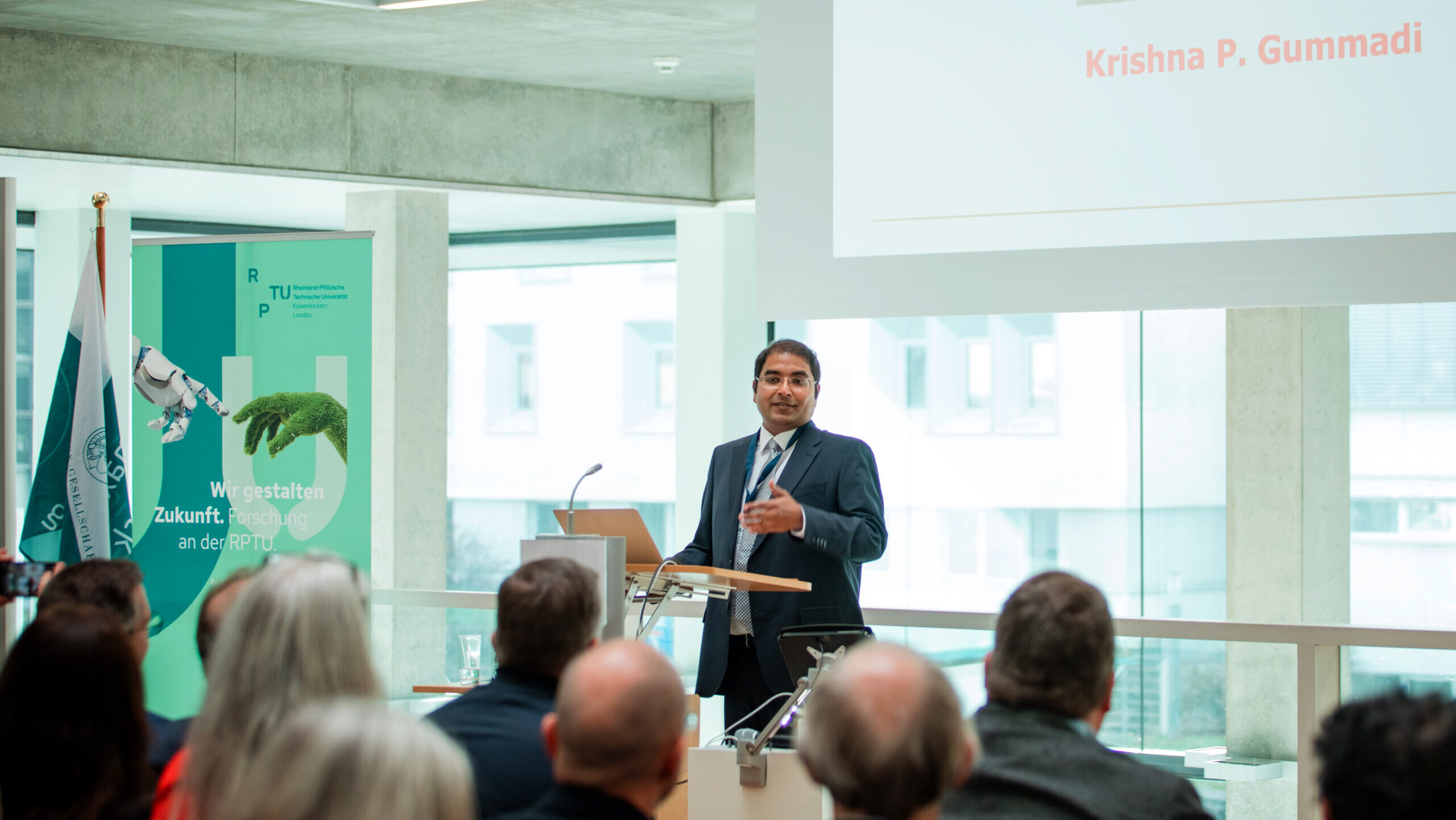
AICS-SOUNDS Workshop

AICS and SOUNDS brought together researchers across disciplines to explore shared scientific challenges and new directions for interdisciplinary research on AI, computing, and society.
Read More →

ARCHIVE

Past news & events

Browse past news and updates by year.

Past Events

When
Monday, 2 November 2026 · 11:00
Where
MPI-SWS, Paul Ehrlich Str. Building 26, Kaiserslautern, Room 607
Meeting ID: 643 5627 5510
Passcode: 108402
Host
Krishna Gummadi
Affiliation
National Institute of Informatics (NII), Japan
Type
AICS Talk
Audience
Researchers, faculty, postdocs and doctoral researchers
Registration
No registration required
 
Abstract

AI agents increasingly mediate how information is selected, interpreted, and presented, raising questions that go beyond factual accuracy: how does this mediation shape the decisions people make?

In this talk, I explore how agent-mediated information influences evidence representation, human judgment, and decision outcomes. Drawing on research in financial information and decision support, I examine how source framing propagates through LLM-agent workflows, how AI-generated text influences agent, expert, and non-expert judgments, and why changing a decision does not necessarily mean improving it. I also introduce decision-oriented text evaluation as a way to assess information based on the decisions it supports, rather than text quality alone.

Finally, I discuss the potential collective effects of shared AI information interfaces and how agent-based simulation can help explore these dynamics. Together, this work points toward evaluating AI-mediated information not only for factual reliability, but also for its consequences for human agency and decision quality.

Bio
Chung-Chi Chen is an Assistant Professor at the National Institute of Informatics (NII), Japan. His recent research investigates how large language models and agents mediate communication, reshape human decision-making, and influence society. He is particularly interested in LLM-mediated communication, the social impact of agents, human-agent collaboration in high-stakes settings, and the detection and verification of forward-looking exaggeration and misinformation. He leads the Human-Agent Ally Lab (HAA Lab).
When
28 October 2026 · 12:15
Where
MPI-SWS Kaiserslautern · Room 111
Paul-Ehrlich-Straße 26
67663 Kaiserslautern, Germany
Meeting ID: 643 5627 5510
Passcode: 108402
 
Host
Krishna Gummadi
Affiliation
RPTU
Type
Research Lecture
Audience
Researchers, faculty, postdocs and doctoral researchers
Registration
No registration required
Abstract

Anomaly detection is one of the fundamental topics in machine learning and artificial intelligence. The aim is to identify instances that deviate from the norm, so-called anomalies. Such anomalies arise in many scenarios, ranging from attacks on computer or energy networks to critical faults in industrial systems or rare tumors in medical imaging data.

In this talk, I will first provide an overview of the field of anomaly detection, with an emphasis on approaches based on deep neural networks. I will then present recent algorithms and theoretical advances in deep anomaly detection. In particular, I will discuss why certain methods work and how their behavior can be better understood using principled analysis.

Furthermore, I will highlight recent developments in anomaly detection for time series data, including new benchmark datasets and theoretically-grounded evaluation metrics. Finally, I will conclude with an outlook on promising future research directions in anomaly detection.

Bio

Marius Kloft is Professor of Machine Learning at RPTU Kaiserslautern-Landau, Germany. He received his Ph.D. from TU Berlin in 2011 and previously held positions at UC Berkeley (10/2009-09/2010), NYU’s Courant Institute (12/2012-03/2024), Memorial Sloan-Kettering Cancer Center (12/2012-03/2014), Humboldt University of Berlin (04/2014-09/2017), and the University of Southern California (09/2018-03/2019). He is co-affiliated with the International Max Planck Research School on Trustworthy Computing (IMPRS-TRUST) and ELLIS.

His research focuses on the foundations of machine learning, particularly in deep anomaly detection. His work regularly appears at venues such as AISTATS, AAAI, ICML, ICLR, JMLR, NeurIPS, and TPAMI.

His paper Deep One-Class Classification (ICML 2018) received the ANDEA Test-of-Time Award for the most influential paper in anomaly detection in the ten year period 2011-2020. He is a recipient of the DFG Emmy Noether Career Award and the Google Most Influential Papers Award. He leads several large-scale national research consortia in Germany, including DFG FOR 5359 and CZF Breakthrough AI4ChemRisk. He regularly serves as (Senior) Area Chair at major international conferences, most recently AAAI 2026, AISTATS 2026, ICML 2026, ICLR 2026, IJCAI 2026, and NeurIPS 2026.

When
Friday, 23 October 2026 · 12:15
Where
Saarland University Campus
Building E1.7 · Room 3.23
Saarbrücken
Host
SOUNDS
Affiliation
Saarland University
Type
Public Lecture
Audience
Students, researchers and anyone interested in Computational Social Science
Registration
About the lecture

This session introduces novel data sources that can be used in social science through collaboration with computer science. Examples range from social-media advertising data to satellite imagery.

Speakers

Daniela Braun
Saarland University · I2SC · SOUNDS
Speaker profile →

Ingmar Weber
Saarland University · I2SC · SOUNDS
Speaker profile →