
AICS-SOUNDS Workshop
The goal of the workshop was to spark ambitious ideas and build collective momentum for long-term research collaboration. The immediate focus was on defining concrete intermediate steps and exploring potential institutional models to transform cooperation into sustainable structures that integrate data, applications, and interdisciplinary expertise.
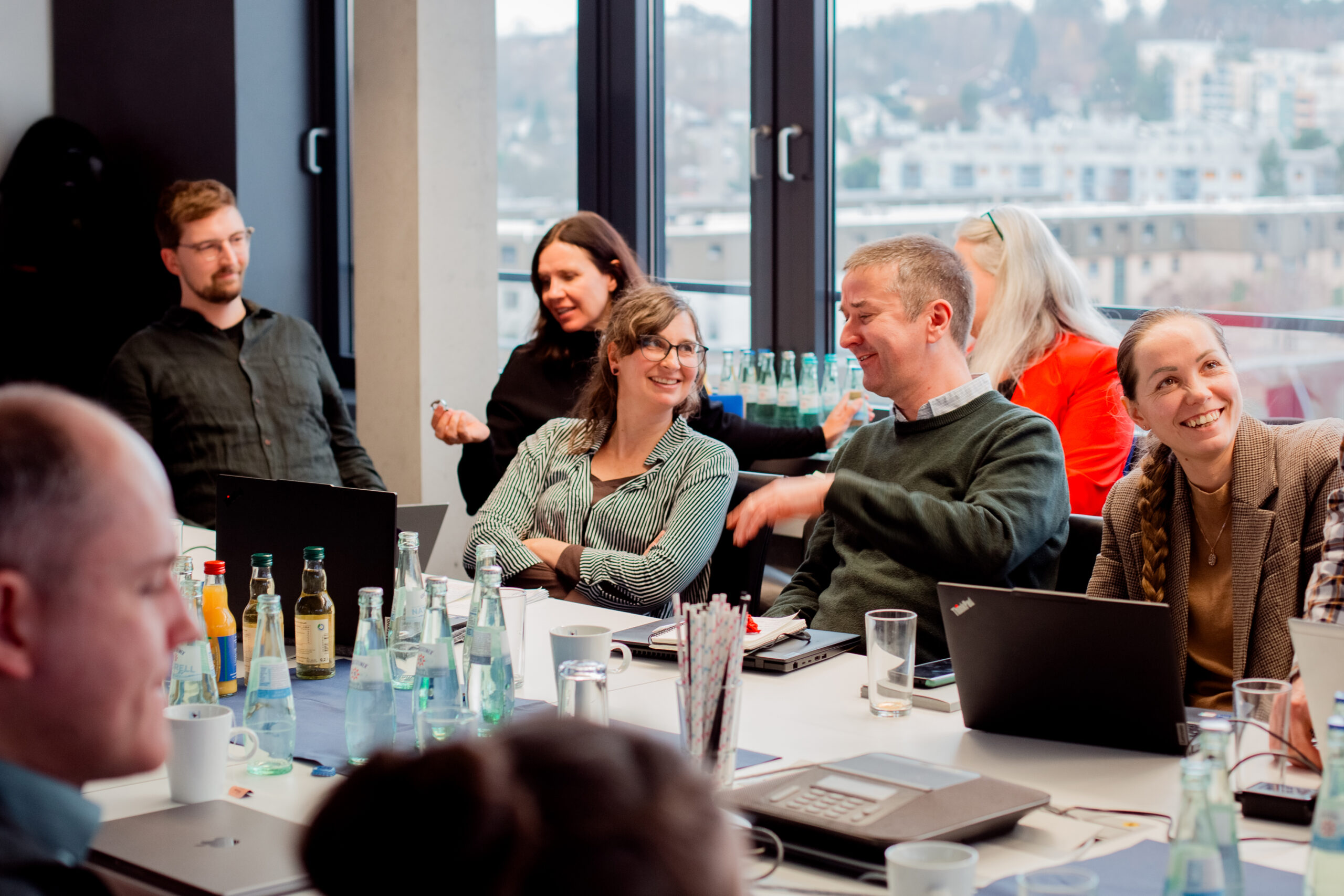
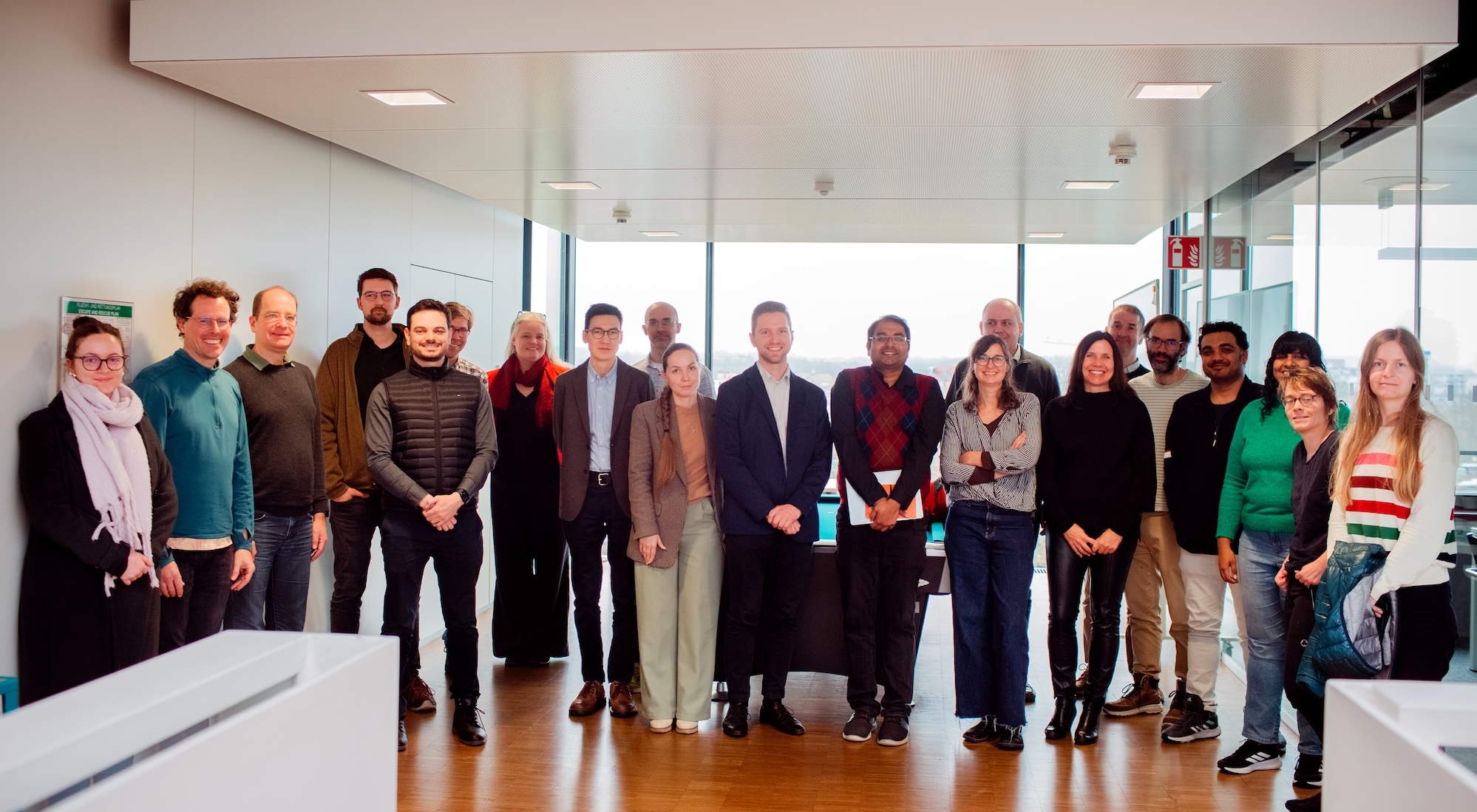
Agenda

Krishna P. Gummadi
Krishna P. Gummadi presented AICS (Artificial Intelligence, Computing, Society) is a joint venture of RPTU, MPI-SWS, and RP Ministry of Science. From online content curation to algorithmic driver matching, AICS explores how computing architectures influence societal outcomes. It highlights the distinction between AI and the underlying computing architectures, showing how architectural design can explain the AI’s bias, accountability, and governance. The initiative aims to link societal problems to computing models via computing architectures. Future professorships and interdisciplinary projects will refine the focus, potentially with participation from other Max Planck Institutes.
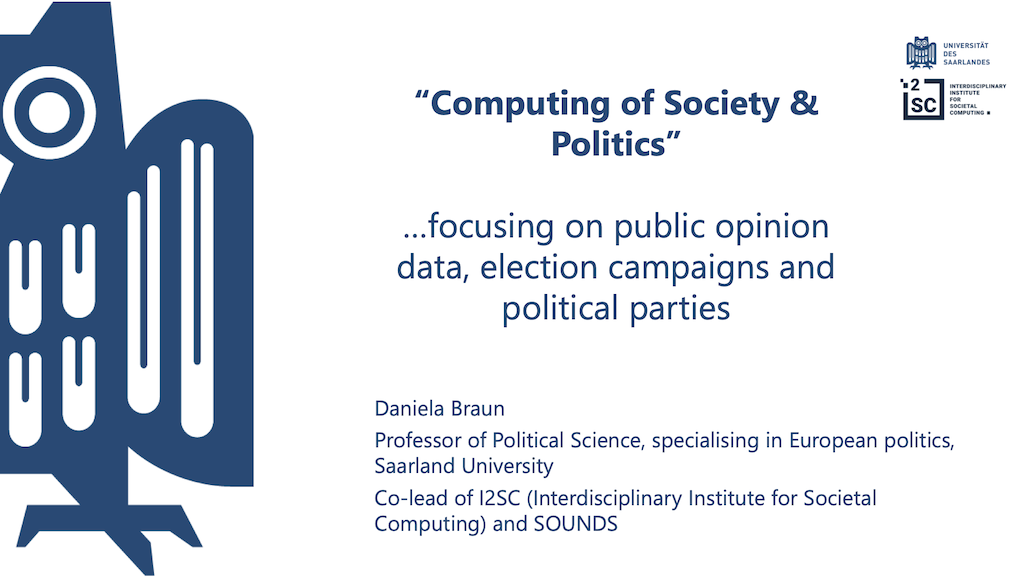
Daniela Braun
Daniella Braun elaborated on computational political science, studying public opinion, elections, and political behavior in multi-level EU systems. The presentation stressed that studying political behavior and opinion formation requires moving beyond traditional surveys toward digital data sources. She argued that traditional data collection methods are too slow for a fast-changing digital world. Her team seeks scalable, automated approaches that maintain data reliability while expanding into digital contexts such as social media and online campaigns. By using LLMs for annotation, the group aims to reduce manual coding in projects like UNTWIST, which investigates gender and politics in European parties.
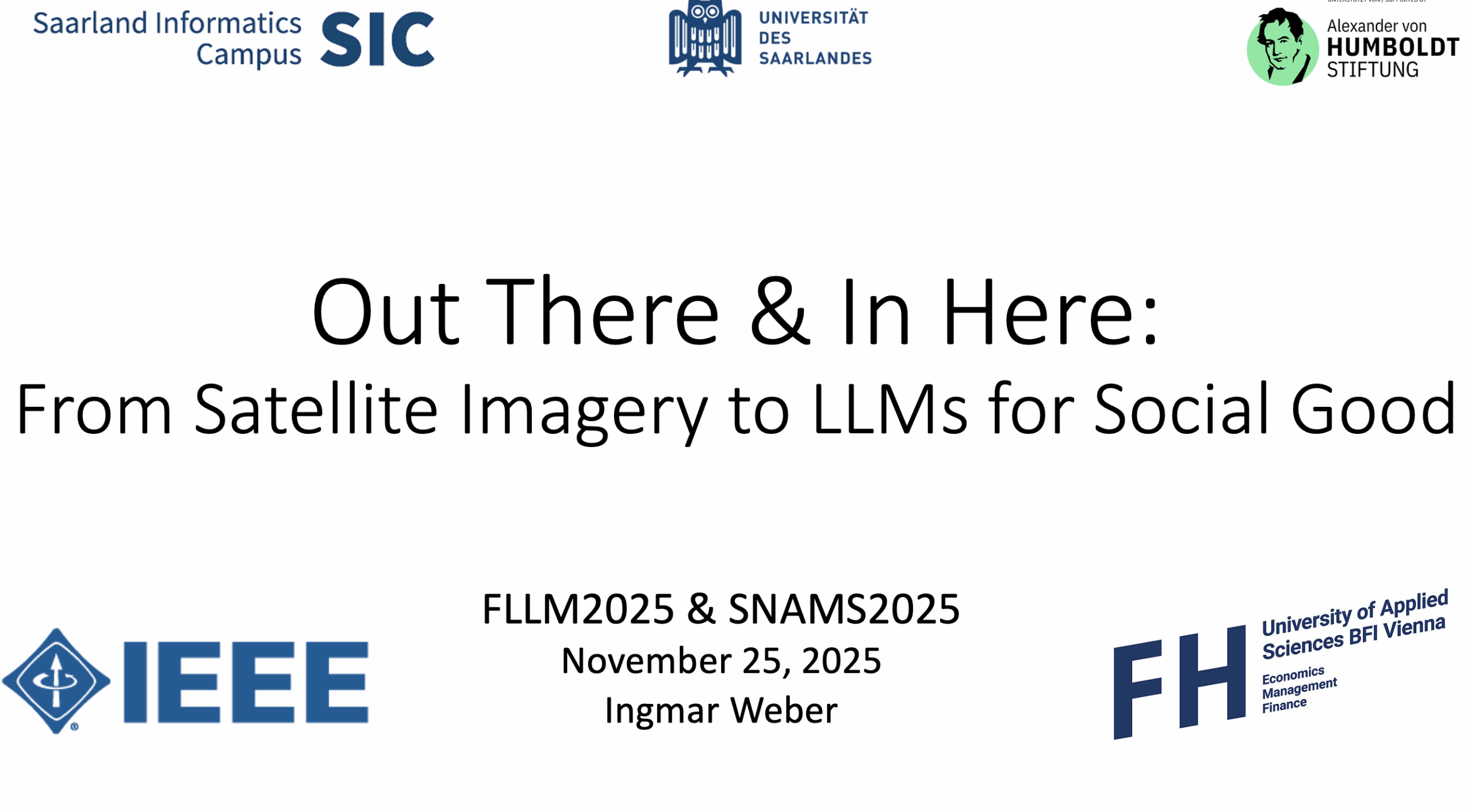
Ingmar Weber
Ingmar Weber discussed the concept of “computing for society,” focusing on integrating computer science with social applications. His work positions data innovation and methodological development at the core of social computing, emphasizing the need for Venn-style overlap between novel methods, novel data, and real-world applications. His group studies how unconventional data—such as satellite imagery, Google Maps reviews, or parking patterns—reveal social and economic dynamics. Examples included using shadows from floating oil tanks in China to estimate oil reserves or detecting demographic traits from aerial images of residential areas. The presentation emphasized the growing importance of diverse, large-scale data for understanding human behavior and markets.
Stefanie Roos
Stefanie Roos leads the group Secure Decentralized Systems at RPTU Kaiserslautern-Landau. Their research focuses on trade-offs between privacy, security, and performance in decentralized systems. Their work includes P2P Networks, with a focus on anonymity and censorship resistance. For instance, they contributed to the censorship-resistant P2P Network Freenet. Furthermore, they have worked on payment channel networks like Lightning, which improve the scalability of blockchains by allowing some transactions to be conducted locally. In particular, they designed SpeedyMurmurs, a local payment routing algorithm. At the moment, they are involved in various projects that analyze and improve the security and privacy of distributed machine learning systems such as Federated Learning and Multi-Discriminator GANs.
Christoph Sorge
Christoph Sorge is a professor for Legal Informatics at the Saarland University. He holds a joint affiliation with the Faculty of Law (Fakultät R) and, as a cooperating member, also with the Faculty of Mathematics and Computer Science (Fakultät MI). As head of the Chair for Legal Informatics at Saarland, he directs the Institut für Rechtsinformatik, part of which combines legal and technical expertise for interdisciplinary research on law and IT. He is also associated with the Helmholtz-Zentrum für Informationssicherheit (CISPA). His work lies at the intersection of law and technology, including privacy by design, legal tech, IT security and data protection, legal and technical aspects of AI, and applying machine-learning for legal texts.
Johnnatan Messias
Johnnatan Messias introduced Web3 as Political and Economic Infrastructure. He contrasted centralized Web 2.0 architectures with decentralized blockchain systems where data ownership is returned to users. He described how Web3 enables transparent decision-making through decentralized autonomous organizations, prediction markets, and stablecoins, offering governance without centralized control.
Michaela Maier
Michaela Maier from Landau introduced the SCOPE project on political communication. Her team studies how citizens consume and spread political information— previously drawing on data from traditional television, today, from digital platforms. Using a custom web tracker, they collect behavioral data on information exposure and mobilization. Their work on misinformation, climate change, and immigration links communication research with computational tools. Michaela also presented the ERC proposal BRIGHTDARKPOL, which examines interpersonal political communication via WhatsApp and correlates it with geolocation and imagery data to study radicalization patterns among disadvantaged communities.
Dominik Brodowski
Dominik Brodowski spoke on criminal law and IT security, focusing on how AI can be responsibly integrated into judicial systems. His work explores IT security, European Idea, frontiers of criminal justice. How can AI tools be made more accessible for the justice systems? When will judges and prosecutors make use of the AI tools? How can trust be raised? Potential for linking the different interests of this workshop’s members together: the evolution of laws in response to societal changes and how people adapt to new legal frameworks. He also emphasized the broader theme of connecting social trends, data, and justice system reform.
Abhisek Dash
Abhisek Dash presented his study on algorithmic auditing of social media. Using crowd-sourced data from Prolific, they examined how users interact with AI systems like ChatGPT—categorizing conversations into roles (assistant, advisor, companion). Their work highlights AI’s emerging social function and raises questions about content moderation, transparency, and user agency on digital platforms.
Sophie Felling & Marius Kloft
Sophie-Felenz & Markus Klaft from Kaiserslautern presented their machine learning Kaiserlautern Landau (MLKL) group’s cross-disciplinary work linking AI, environmental science, and sustainable production engineering. They focus on generative AI, anomaly detection, domain-informed modeling, and responsible AI. Their projects, funded by DFG, ERC, and others, include deep learning for global chemical exposure prediction and sustainable industrial processes.
Alex Hartland
Alex Hartland presented ActEU, a project on European citizens’ trust and polarization. Using a multilingual dataset of over 30 million digital items—including websites, news articles, tweets, and Telegram posts—he measures how crises affect legitimacy. He found that BERT models outperform open-weight LLMs in classification efficiency and affordability. The group experiments with data augmentation to reduce manual annotation while addressing LLM-assisted social research challenges like distinguishing sentiment from stance.
Georg Wenzelburger
Georg Wenzelburger discussed his political science work on digitalization and governance (overseen by Katharina Zweig). He studies how bureaucrats use algorithmic decision-making systems and how citizens perceive AI’s role in democracy. Acceptance of AI systems by bureaucrats and local municipalities, and how decisions are made using AI. The states use AI, but we don’t know about it. Democratic issues are at stake here. Surveys at local levels assess attitudes toward AI adoption in public administration.
Abhilasha Ravichander
Abhilasha Ravichander presented TBA
Manuel Gomez Rodriguez
Manuel Gomez Rodriguez TBA…